Overnight Oats for Busy Mornings, With Room to Adjust
An adaptable overnight oat formula, three flavor directions, and practical advice for choosing jars and keeping toppings enjoyable.
Shopping note: this guide includes buying advice. Retailer links currently use no affiliate tracking. If affiliate links are added, we may earn a commission at no extra cost to you. Read our disclosure.
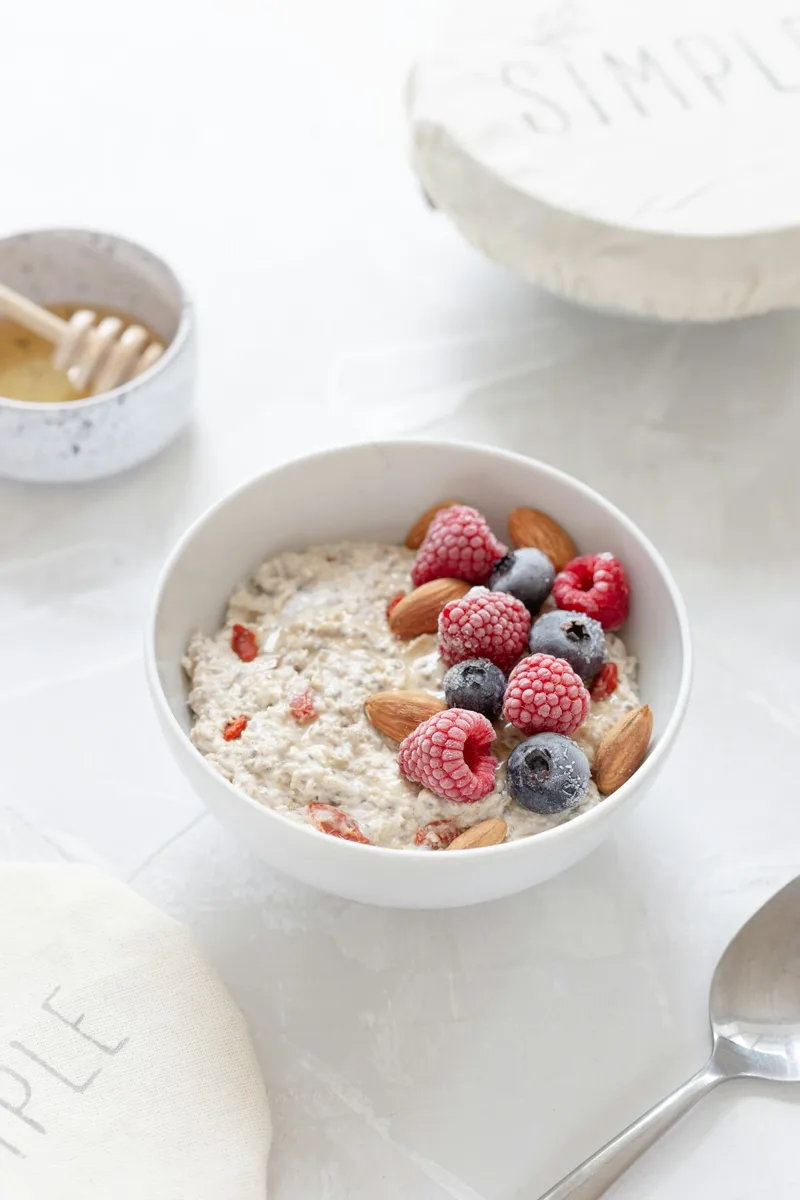
Lifestyle photography for editorial illustration; not a product test or a photograph of a tested recipe.
Some mornings begin with enough time to make toast and sit down. Others begin with a missing shoe and a calendar reminder. Overnight oats belong to the second kind of morning: breakfast is already assembled, and the remaining decisions are whether to add fruit and which spoon to take.
The appeal is convenience, but texture determines whether the routine lasts. Start with a single portion before preparing several jars. Different oats, milk choices, and yogurt thicknesses produce different results. This original recipe framework is designed for adjustment; it is not presented as a tested recipe or a nutritional prescription.
Begin with one straightforward portion
In a covered container, stir together 1/2 cup old-fashioned rolled oats, 1/2 cup milk or an alternative you already enjoy, and 1/4 cup plain yogurt. Add a small pinch of cinnamon and, if desired, 1 teaspoon maple syrup. Cover and refrigerate overnight.
In the morning, stir thoroughly. Add another tablespoon or two of liquid if the oats are thicker than you like. If the mixture seems loose, use a little less liquid in the next batch. Record your preferred ratio in a kitchen note so that an early morning does not become an exercise in remembering fractions.
Quick oats can give a softer texture, while steel-cut oats require a different preparation approach. Read the package directions rather than substituting either without adjustment. If you are cooking for someone with ingredient restrictions, check every label, including yogurt, toppings, and flavored milk alternatives.
Choose a flavor direction
Apple and cinnamon
Add a few spoonfuls of finely chopped apple when serving, along with cinnamon and chopped walnuts if suitable for your household. Keeping the apple separate overnight preserves more contrast with the soft oats. A little applesauce can go into the base when fresh fruit is not available, although it changes the final thickness.
Berry and lemon
Stir a small amount of finely grated lemon zest into the base and add berries in the morning. Frozen berries may release substantial liquid as they thaw, so allow for that in your next batch rather than automatically adding more milk. Choose a container with enough extra space to stir without spilling.
Cocoa and banana
Mix 1 teaspoon unsweetened cocoa into the dry oats before adding liquid. This helps avoid dry pockets of cocoa. Add sliced banana at serving time and a spoonful of nut or seed butter if you like. The butter thickens the mixture, so loosen the oats before adding it rather than trying to stir an overfilled jar.
Make the storage container easy to use
A narrow jar looks tidy but can be awkward to eat from, especially with a short spoon. A wide opening makes stirring and cleaning simpler. Check whether the lid can be washed the way you normally wash dishes, and look for small grooves or removable seals that need separate cleaning.
Glass is convenient at home and makes the contents visible. It also adds weight to a commuter bag and needs protection from knocks. A lightweight food container may suit travel better. A dedicated breakfast jar is optional: an existing container with a secure lid and enough headroom can do the same work.
Before buying a set, prepare one portion in something you already own. Notice whether you need more capacity, a broader opening, or a more reliable lid. Those observations are more useful than choosing by matching colors alone.
Avoid turning convenience into a large commitment
Set up tomorrow’s breakfast while clearing dinner, with ingredients already near the counter. Put the oats away promptly and keep perishable ingredients refrigerated. Follow the instructions on your ingredients and USDA storage guidance rather than assuming every batch lasts the same number of days.
Prepare a fresh portion the next evening if you are still deciding whether you like the texture. Once you find a combination that works, make only the amount your household will realistically eat. A shelf full of jars is not an improvement if everyone wants toast by Wednesday.
Does breakfast have to stay cold?
If you prefer warm oats, choose a container and preparation method appropriate for heating, follow the manufacturer’s directions, and transfer the contents when needed. Do not assume a decorative jar is suitable for a microwave.
For more morning options, see make-ahead breakfasts for school days. The food-storage guide can help you choose containers that earn their cupboard space.